
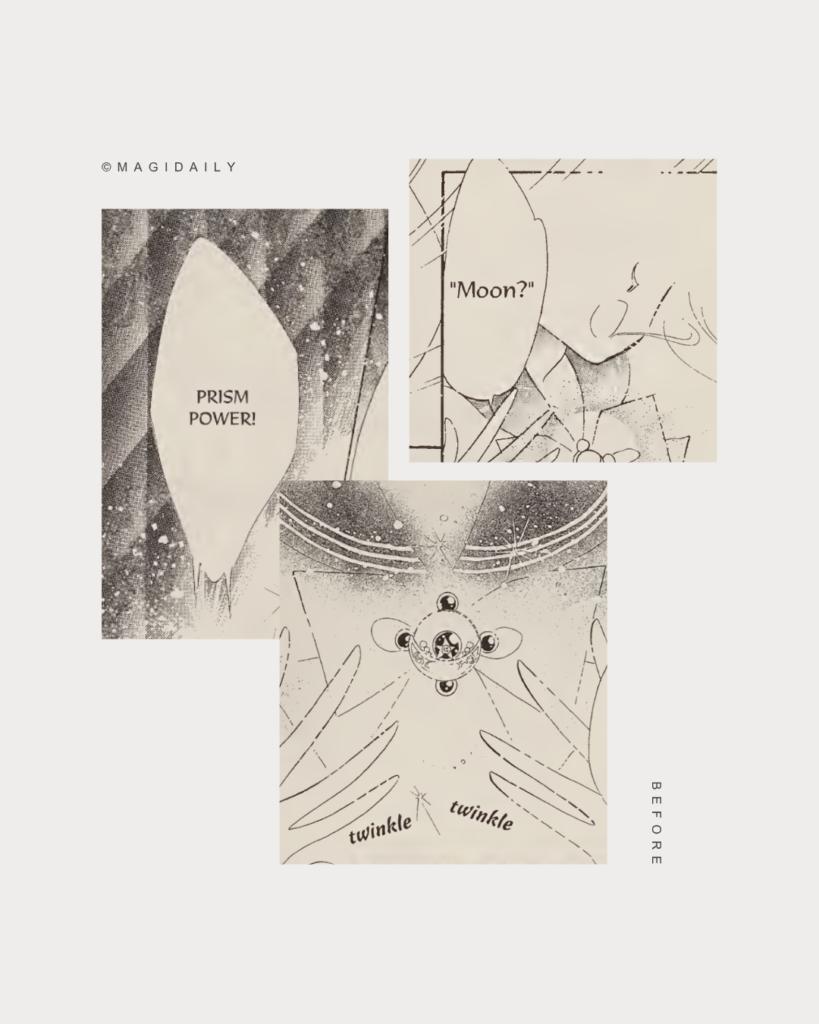
If the manga gives us a quiet, still transformation, the 1990s anime gives us the complete opposite: a flowing, musical, twenty-second spectacle that you want to watch again and again.
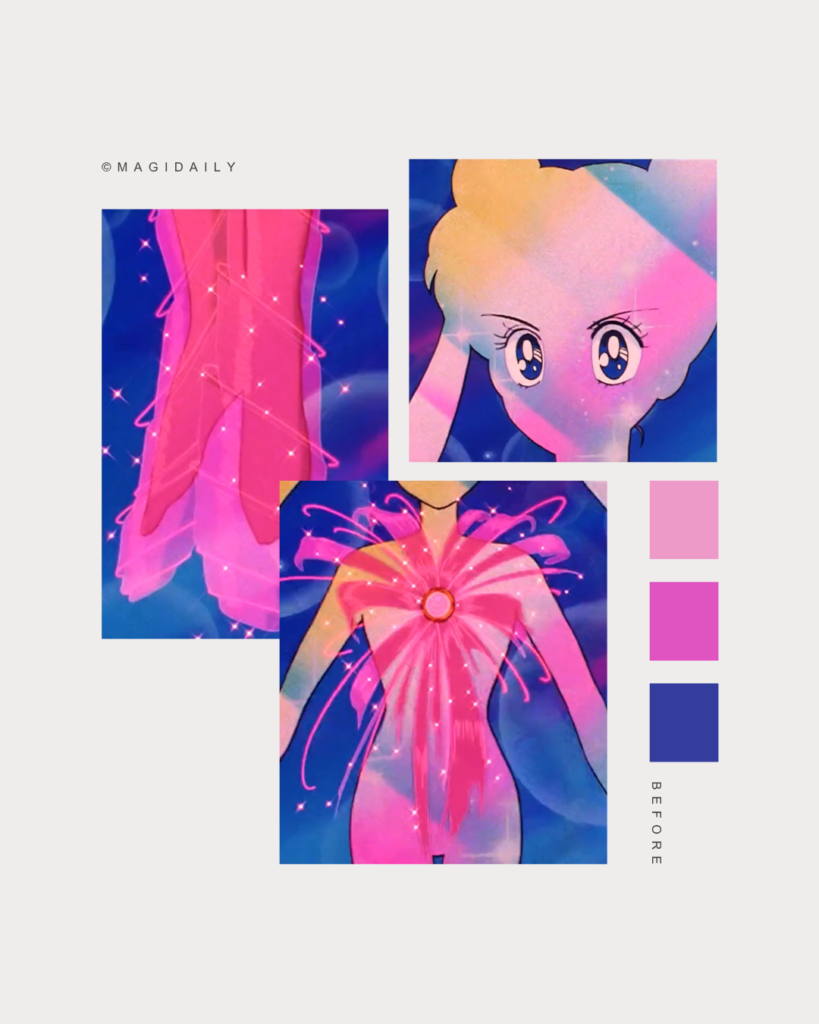
The anime created what fans call the “transformation bank.” This was a pre-made animation sequence that could be reused in almost every episode. From a production standpoint, it saved money. But from a storytelling standpoint, it became something much more important: a ritual. When the battle music stopped and the transformation music started, you knew exactly what was about to happen. It was like hearing the chorus of your favorite song. The comfort of that repetition was the point.
The colors in the 1992 anime are special because of the way they were made. This was the era of hand-painted cels on plastic sheets. The light effects had a soft, glowing quality that is very hard to reproduce with digital tools. Usagi’s transformation used pinks, yellows, and blues that looked like melted candy. The whole scene felt like being inside a jewelry box.
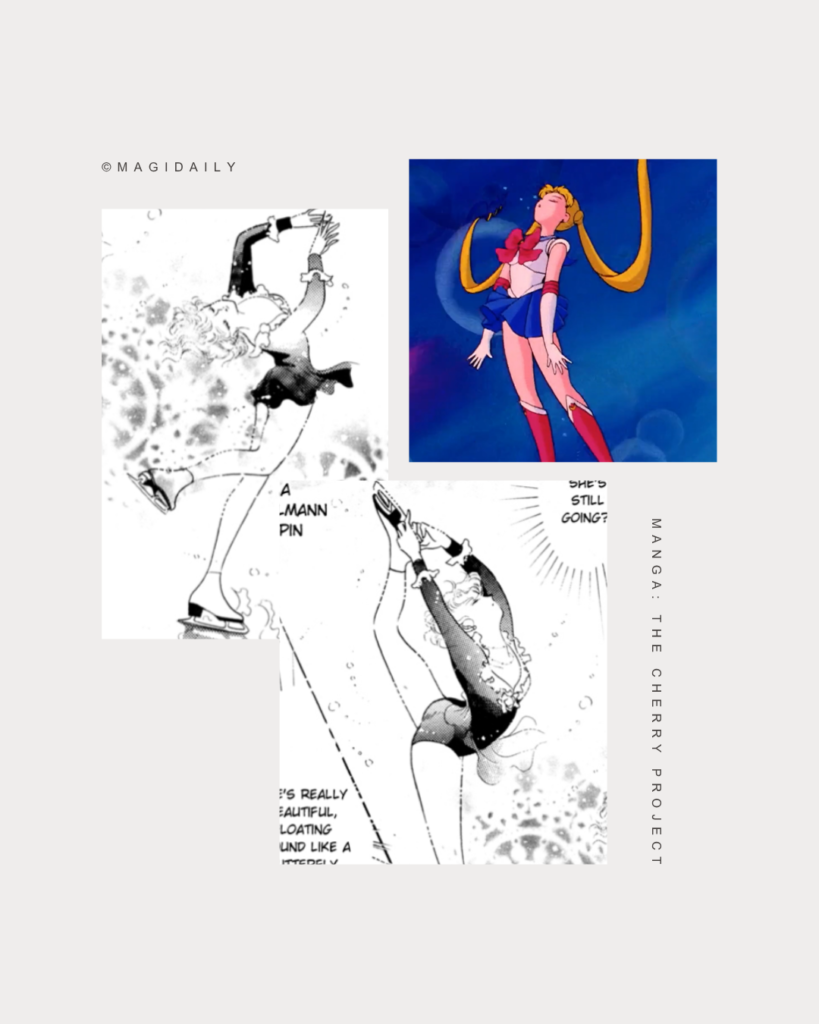
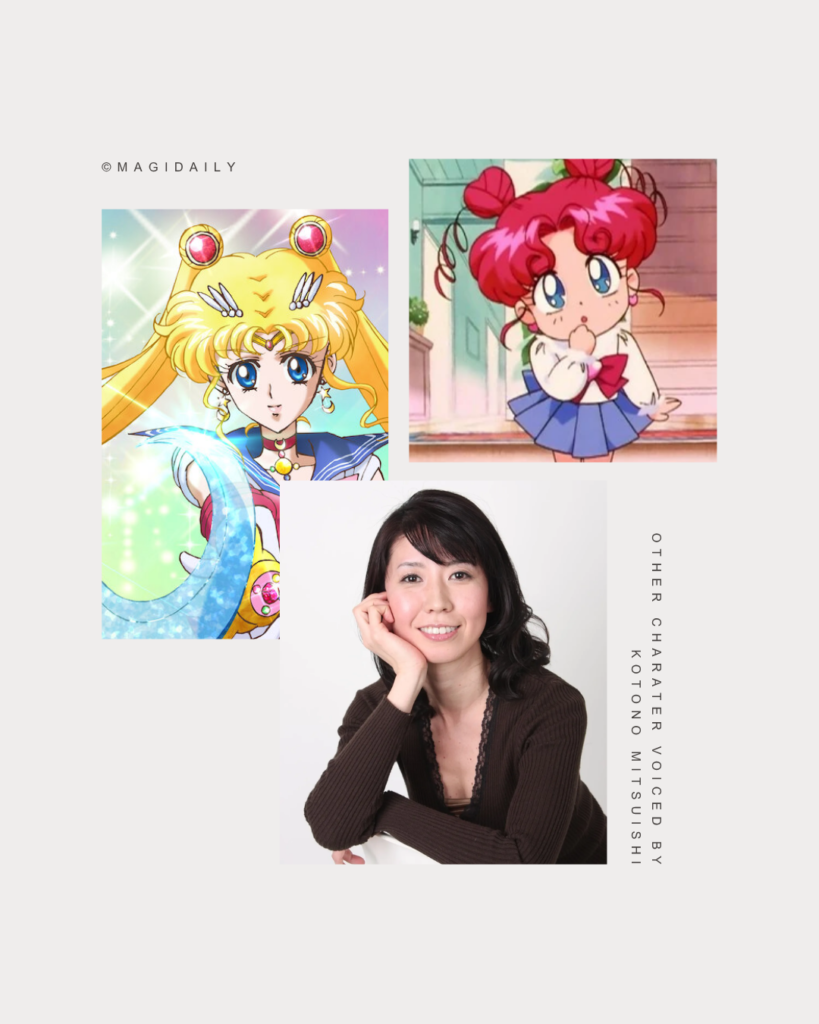
The movements were carefully choreographed, too. Usagi’s spinning, the way her arms trace the outline of her new outfit, the final pose with one leg lifted—these were inspired by ballet and figure skating. It made getting dressed look like a dance. And the voice acting by Kotono Mitsuishi, especially the famous line “Moon Prism Power, Make Up!”, was powerful and perfectly matching the rhythm of the animation.
This 1992 anime established the grammar that almost every magical girl show would follow for the next thirty years: the magical item, the burst of light, the step-by-step dressing, the spin, the final pose, and the opening of the eyes. It taught an entire generation that sometimes, pausing the story to watch something beautiful is a worthy part of the story itself.